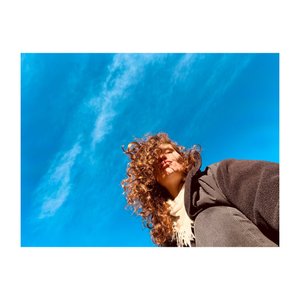
The Ground Beneath Becoming
Arnold van Gennep, Rites of Passage, and the Work of Becoming More Fully Ourselves
There are times when a life that has taken many directions can feel difficult to explain. We are often expected to present ourselves as a coherent sequence: one education, one profession, one identity, and one clearly marked path forward. A life that moves among trades, disciplines, landscapes, communities, and forms of care may be viewed as unfocused. Even from within, such a life can sometimes feel fragmented.
I have spent much of my life crossing between worlds.
I have been a bodyworker, herbalist, wilderness guide, business owner, craftsperson, student, researcher, and community member. I completed my bachelor’s degree after twenty-six years, eight colleges, and four trade schools. For a long time, I understood this history primarily through the language of persistence. I had kept going. I had found another route each time the original route closed.
Arnold van Gennep’s work on rites of passage has given me another way to understand that journey. A life does not have to proceed in a straight line to possess continuity. We may become ourselves through a succession of departures, thresholds, and returns. What appears from the outside as inconsistency may contain a deeper pattern of transformation.
A Map of Human Transition
Arnold van Gennep was a French ethnographer and folklorist whose most influential work, Les Rites de Passage, was first published in 1909 and translated into English as The Rites of Passage in 1960. Drawing comparisons among ceremonies surrounding birth, initiation, marriage, territorial movement, death, and changes in social status, van Gennep argued that transitions often share a three-part structure: separation, transition, and incorporation (Van Gennep 10–11).
The first stage involves leaving a former position or identity. The second is a threshold period in which the old role has ended, but the new one is not yet secure. The third marks a return to social life in a changed position.
Van Gennep’s structure gives social form to an experience that can otherwise feel entirely private. We leave something, move through uncertainty, and return to our relationships differently. Although change occurs within us, it also alters our relationship with other people, with place, and with the responsibilities of a new role.
Seen through this framework, disorientation takes on another meaning. A profession, relationship, home, belief system, physical capacity, or former understanding of ourselves may be gone before we know what will replace it. Confusion does not always mean that we have lost our way. Sometimes it means that we have reached a threshold.
Separation: Honoring What Has Ended
The first movement in a rite of passage is separation. Something must be released before something else can emerge.
I am always working on this, perhaps in true Taurus fashion, sometimes at a colossally slow pace, but working on it nonetheless.
Modern culture is often impatient with this stage. We are encouraged to move forward quickly, remain optimistic, announce the next plan, and transform loss into an appealing story of personal growth. Separation, however, carries grief. Even a desired transition may involve the loss of familiarity, status, community, certainty, or a former image of the self.
When I consider the many directions my life has taken, I can see that each required a departure. To become a student again, I had to release the idea that education follows only one respectable timeline. To deepen my work as a practitioner, I had to move beyond identities and methods that no longer held the fullness of what I understood care to be. To make a home in new places and communities, I had to acknowledge both what I carried with me and what could not come along.
Van Gennep’s structure gives endings their rightful place. Leaving is not an empty interval before transformation begins. It is already part of the transformation.
I find relief in this recognition. I do not have to disown former versions of myself simply because I have changed. The guide, herbalist, craftsperson, student, and practitioner are not abandoned identities scattered behind me. Each has taught me how to pay attention. Beneath their different forms runs a continuous set of commitments: care, curiosity, relational responsibility, embodiment, and respect for the living world.
Liminality: The Uncertain Middle
The middle stage is the liminal period. The word comes from limen, the Latin word for threshold. During this stage, a person is no longer securely located within a previous role, but has not yet been incorporated into the next.
Anthropologist Victor Turner later expanded van Gennep’s work, describing liminal people as “betwixt and between” established social positions. He was especially interested in the ways in which ordinary distinctions of rank and status can temporarily loosen during ritual transitions, creating forms of shared experience that he called communitas (Turner 95–97).
Liminality can be creative, but it is not necessarily comfortable. It may involve ambiguity, invisibility, humility, or the loss of familiar markers. A person in transition may feel difficult to categorize because that person is no longer who they once were and cannot yet demonstrate who they are becoming.
I know this territory well. Returning to school as an adult placed me in a curious position. I carried considerable life experience, but my institutional role was still that of a student. Building a practice required years of doing meaningful work before that work was fully recognized. My movement among academic inquiry, physical medicine, herbal knowledge, outdoor leadership, and the study of care culture has often left me between conventional categories.
Liminality gives this middle ground a name. The uncertainty is not a flaw in the passage. It is part of the passage itself.
Our culture favors finished identities. We are asked what we do, where we belong, and what single title can contain us. My most honest answer is that I am still becoming. I have a center, but it cannot be reduced to one role.
Uncertainty, however, should not be romanticized. It is easier to tolerate when a person has material security, trustworthy relationships, and some reason to believe that the passage will eventually end. Unchosen displacement, prolonged instability, illness, and economic precarity may leave someone suspended without the protection that ceremonial transitions once provided. Uncertainty is not inherently beneficial. People crossing thresholds need accompaniment.
Therapy as Accompaniment
I recently returned to talk therapy. Throughout my adult life, therapy has ebbed and flowed as I have searched for someone who might help me to help myself, understand my patterns, confront what no longer serves me, and continue to grow.
We each need something different from a therapist. Some people seek affirmation. Some need a practitioner who asks careful questions. Others want room to speak while someone listens. All of these approaches have value. I have learned that I need someone who can hold up a mirror, ask difficult questions, illuminate a spiritual path in pragmatic terms, and encourage me to make the choices I might otherwise avoid.
After many years, I have found such a person again. I can finally release a long and grateful sigh.
Returning to therapy feels like a small rite of passage. The separation begins when I recognize that an old way of coping or understanding myself is no longer sufficient. I then enter the uncertain middle, where familiar explanations begin to shift and difficult truths come into view. Whatever follows will depend upon what I am willing to carry back into my life.
A therapist cannot complete this passage for me. They cannot make my choices or remove the uncertainty that accompanies change. They can sit beside me while I find language for the threshold. They can witness what I am relinquishing and remind me that becoming more fully myself may require decisions that feel frightening, unfamiliar, or long overdue.
The passages of adult life rarely arrive with formal ceremonies. Some begin quietly, with an appointment made, a difficult truth spoken aloud, or the realization that I am finally willing to see myself more clearly.
Incorporation: Becoming Is Relational
Van Gennep’s final stage is incorporation. A person returns to collective life with a new status, identity, or responsibility. A ceremony, gathering, meal, new name, change of clothing, or act of public recognition may mark the return.
Becoming is never entirely private. We come to know ourselves partly through the ways other people recognize us.
Psychiatrist R. D. Laing explored this relational dimension of identity in The Divided Self. Although his book focused on schizoid experience and psychosis, his discussion of reciprocal recognition extends beyond the clinical setting. I recognize another person as someone who possesses an identity of their own, and that person recognizes me as someone whose experience of myself has legitimacy (Laing 35).
A rite of passage makes that recognition visible. It tells us that our departure was witnessed, that what we endured or learned has been acknowledged, and that we are being received into a changed relationship.
Graduation affected me so deeply for this reason. The degree represented intellectual work, but the ceremony held something more relational. My family, teachers, friends, and community had watched a process that stretched across decades. The passage did not end when I submitted my final assignment. It ended when the journey was witnessed and I was welcomed into a new understanding of my own history.
I did not become a different person on graduation day. I was publicly reunited with parts of myself that had been developing all along.
Therapy, for me, offers a quieter form of recognition. A therapist may witness changes that remain invisible to the larger world. A difficult decision, a new boundary, or an honest acknowledgment of grief may come without ceremony. Being witnessed can help make the crossing feel real.
Belonging to Place
bell hooks brings place into the story of becoming. In Belonging: A Culture of Place, she writes about homecoming, memory, land, family, estrangement, and the search for ground firm enough to support a meaningful life. Her journey is not a simple return to an unchanged home. Leaving changes how she understands where she came from, while returning allows her to recover forms of knowledge that distance had made visible (hooks 2–5).
Passage occurs through landscapes as well as social roles.
The forests, mountains, shorelines, gardens, treatment rooms, classrooms, and communities of the Pacific Northwest have participated in making me. Place (and space) is not a passive background against which my life occurs. It teaches scale, season, interdependence, patience, and consequence. The body knows where it has walked. It remembers the rooms in which it has been welcomed, the landscapes in which it has felt capable, and the communities in which what it knows has been useful.
To be grounded does not mean remaining unchanged or refusing to leave. Belonging grows through memory, movement, return, and attention. We may leave a place and come to understand it more clearly. We may return without becoming the person we once were. Home may be less an origin than a living relationship that asks something of us.
Creating Rites without Borrowing What Is Not Ours
Van Gennep drew from ceremonies belonging to many distinct peoples and traditions. His framework remains useful, but it does not give us permission to extract sacred practices from cultures to which we are not accountable.
We do not need to imitate another community’s initiation ceremony. We can learn to mark change within our own relationships, histories, and responsibilities.
A contemporary rite of passage may be modest. We might gather trusted people before a major transition and name what is ending. We might walk a familiar trail, prepare a meal, plant something, write a letter to a former self, make an object, tell a story, or ask someone we trust to witness a commitment. We might honor the beginning of caregiving, the end of a business, recovery after injury, a return to education, a divorce, a move, menopause, retirement, or the decision to live differently.
Spectacle does not make an act meaningful. Attention does. A rite gives shape to a transition that might otherwise remain unnamed.
It also carries responsibility. Incorporation is more than receiving a new identity. Becoming a practitioner brings accountability to clients. Becoming a graduate raises questions about how knowledge will be used. Becoming an elder asks us to consider what we can offer those who follow.
Therapeutic insight carries a similar obligation. Understanding why I behave in a certain way does not change how I live. I must still have the difficult conversation, maintain the boundary, interrupt the familiar pattern, and accept the consequences of choosing differently. Insight becomes part of me only when it begins to shape how I participate in the world.
The Ground Beneath Becoming
Van Gennep offers me a structure spacious enough to hold a nonlinear life. I have not simply changed direction many times. I have crossed thresholds, carried knowledge between worlds, and returned from each passage with a different capacity to participate.
The continuity in my life is not a job title. It is my way of relating.
I am most myself when I am listening carefully, working with my hands, learning across boundaries, caring for bodies and places, connecting ideas that are usually kept apart, and creating conditions in which others can recognize their own agency. These commitments have remained, even as their outward forms have changed.
Identity is neither a fixed object nor an endless project of self-invention. I believe we become through an ongoing conversation among inner experience, social recognition, memory, land, responsibility, and community.
Returning to therapy has brought me back into that conversation. Growth is more than finding a satisfying explanation for who I am. It asks me to see what is present, release what has become too small, and accept responsibility for the person I am becoming. Perhaps groundedness does not require standing still. Perhaps it means knowing what we remain connected to while we move.
Works Cited
Hooks, Bell. Belonging: A Culture of Place. Routledge, 2009.
Laing, R. D. The Divided Self: An Existential Study in Sanity and Madness. Penguin Books, 1990.
Turner, Victor. The Ritual Process: Structure and Anti-Structure. Aldine Publishing, 1969.
van Gennep, Arnold. The Rites of Passage. Translated by Monika B. Vizedom and Gabrielle L. Caffee, University of Chicago Press, 1960.
Image: Germaine Arnaktauyok Rite of Passage (2021) Etching 34.3 x 44.5 cm COURTESY INUIT GALLERY OF VANCOUVER © THE ARTIST